
Log Burner Installation
Choosing the right team for log burner installation makes the difference between a stove that performs safely for years and one that causes ongoing problems. Whether you’re fitting a traditional log burner, a wood burning stove, or a multi-fuel appliance, the installation itself is where safety, compliance, and performance are decided. A properly fitted stove depends on correct flue sizing, secure connections, and adherence to current Building Regulations — not just a good-looking appliance in the room. This page covers what’s involved in professional log burner installation and what you should expect from a competent installer.
Professional Log Burner Installation From Start to Finish
Every log burner installation begins with an honest assessment of your property, not a rushed quote over the phone. A HETAS-registered installer will look at your existing chimney or flue route, check the room’s ventilation requirements, and confirm hearth dimensions before any work is scheduled. This upfront survey matters because it identifies problems — an unlined chimney, insufficient clearance to combustible materials, or a room too small for the appliance you’ve chosen — before they become costly surprises mid-installation.
Once the survey is complete and the appliance is confirmed, the actual wood burner installation follows a defined sequence: removing any existing fireplace fittings, preparing the hearth to the correct depth and material standard, connecting the stove to a compliant flue system, and finishing with a register plate and any necessary ventilation. Every stage is signed off against Building Regulations Part J, which governs solid fuel appliance installations in England and Wales. Skipping steps to save time is exactly how unsafe installations happen.
A typical log burner installation includes:
- Full site survey and chimney or flue assessment
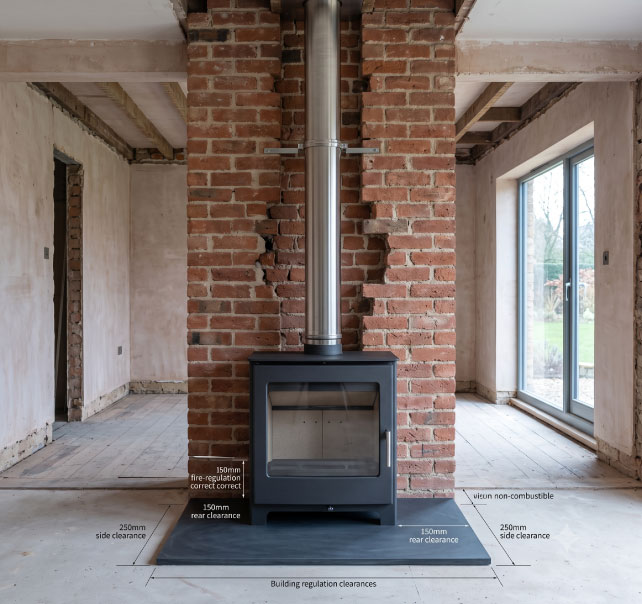
- Hearth preparation and compliance check against appliance clearance requirements
- Appliance positioning and secure connection to the flue
- Fitting or verification of a suitable flue liner or twin wall system
- Final safety checks and HETAS compliance certification
What Happens During Wood Burner Installation
The physical fitting stage is where most of the skilled labour happens. The stove is positioned, levelled, and connected to the flue using the correct jointing method for the flue type present — whether that’s a traditional lined chimney or a twin wall system. Getting this connection wrong is one of the most common causes of poor stove performance, including smoke back-draught and inefficient burning.
Once connected, the installer carries out a smoke test and checks the draw of the flue before handing the appliance over. This isn’t a cosmetic finishing step — it confirms the stove is venting correctly and safely before it’s ever lit for real.
Wood Burning Stove Installation Done to HETAS Standards
Wood burning stove installation carried out to HETAS standards gives you a self-certified installation without needing separate Local Authority Building Control sign-off. This matters both for safety and for any future property sale, since buyers’ solicitors routinely ask for proof of compliant stove installation. A HETAS-registered installer issues a compliance certificate on completion that confirms the work meets current regulations.
Compliance isn’t only about paperwork — it reflects real safety decisions made throughout the installation. Flue height, distance to combustible materials, and ventilation requirements all vary depending on the appliance and the room, and getting any of these wrong creates a genuine fire or carbon monoxide risk. This is why wood burning stove installation should never be treated as a simple DIY swap-out job.
- Full site survey before any price is given
- Flue condition and lining requirements established first
- Hearth dimensions checked against the appliance
- Ventilation calculated against appliance output
- HETAS certification issued on completion
Flue and Chimney Compliance for Wood Stove Installation
Every wood stove installation depends on a flue system that’s correctly sized and rated for the appliance being fitted. Where a chimney already exists, this often means fitting a new flue liner to bring an older chimney up to current standards. Where no suitable chimney exists, a twin wall flue system provides a compliant alternative route to the outside.
Getting the flue specification right affects how well the stove draws and burns, not just whether it passes an inspection. An undersized or badly routed flue can lead to poor combustion, tarring, and reduced heat output — problems that often only surface after the stove has been in use for a while.
Choosing Woodburning Stove Installers You Can Rely On
Not all woodburning stove installers offer the same level of competence, and the difference shows up in how the job is surveyed, priced, and finished. A reliable installer will always visit the property before quoting, rather than pricing blind from a phone call or photos. They should also be transparent about what’s included in the price — appliance fitting, flue work, hearth preparation, and certification — rather than leaving you to discover extras once work is underway.
Ask any installer directly about their HETAS registration status and request to see current certification. This single check filters out a large proportion of unqualified or unregistered fitters before you’ve committed to anything.
Look for woodburning stove installers who:
- Provide a written, itemised quote before starting work
- Hold current HETAS registration and can show proof on request
- Carry out a full site survey rather than quoting remotely
- Explain the flue and chimney work involved in plain terms
- Issue compliance certification on completion of the job
Why Experience Matters in Log Burning Stove Installation
Log burning stove installation on paper looks straightforward, but every property brings its own quirks — old chimneys with unusual dimensions, listed building restrictions, or rooms that need extra ventilation calculations. Experienced installers have seen most of these situations before and know how to solve them without cutting corners on safety.
This experience also shows in how problems are communicated. A good installer will flag issues discovered during the survey clearly, explain the options, and give you a realistic cost before work begins — not halfway through the job.
If you’re planning a log burner installation, getting it right the first time saves money, avoids safety risks, and gives you a stove that performs properly for years. Call 01706 822208 or 07787 858585 to arrange a no-obligation site survey and find out exactly what your installation would involve.
—