
Fitting a Wood Burning Stove to an Existing Chimney
Fitting a wood burning stove to an existing chimney is often assumed to be the simple option, and sometimes it is. Frequently, though, the chimney needs work before it can serve a modern appliance safely. Older chimneys were built for open fires and are usually oversized, and many have deteriorated internally. We assess and adapt existing chimneys across Ramsbottom and roughly thirty miles around, with over twenty-five years of experience. This page explains what the process actually involves.
Assessing Whether an Existing Chimney Is Suitable
Before fitting a log burner into an existing chimney, the chimney has to be assessed properly. That means checking its internal condition, its dimensions, whether it is shared with another property, and whether the flue route is continuous and gas-tight along its full height.
Age is not the deciding factor; condition is. A well-built older chimney in good order may need only lining, while a poorly maintained one may need more extensive work before it can be used at all.
- Internal condition and mortar joint integrity checked
- Flue dimensions measured against appliance requirements
- Shared or adjacent flues identified
- Blockages, bird nesting and debris cleared
- Continuity of the flue route confirmed to the terminal
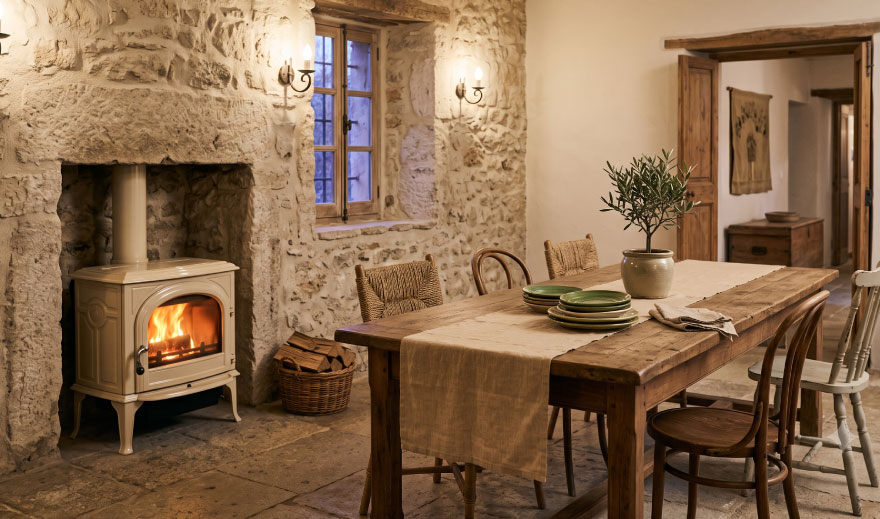
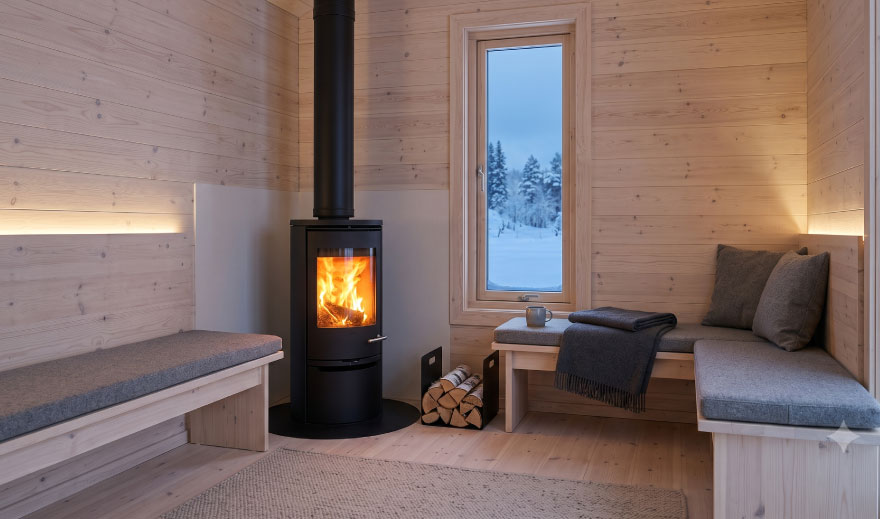
Why Fitting a Log Burner Into an Existing Chimney Usually Means Lining
Most work involving fitting a log burner into an existing chimney includes installing a flexible flue liner. The reason is straightforward: an open-fire chimney is typically far larger in cross-section than a closed appliance needs, and an oversized flue draws poorly and allows gases to cool, producing condensation and tar.
Lining creates a correctly sized, continuous, sealed route from the appliance to the terminal. It also insulates against the surrounding masonry when backfilled appropriately, keeping the flue gases hotter and the draw more reliable.
Fitting Wood Burner to Existing Chimney: The Sequence
Fitting wood burner to existing chimney work follows a defined order. The chimney is swept and inspected, the liner is drawn down and connected, the hearth is prepared or confirmed to the correct dimensions, the appliance is positioned and connected, and a register plate is fitted to close off the builder’s opening.
Smoke testing and draw checks follow before handover, and compliance certification is issued on completion. Skipping the testing stage is how faults reach the customer rather than the installer.
- Chimney swept and inspected before lining
- Liner drawn down and connected to the appliance
- Hearth confirmed or rebuilt to required dimensions
- Register plate fitted with sweeping access
- Smoke and draw testing before handover
Connecting Log Burner to Flue Correctly
Connecting log burner to flue is the joint most likely to cause performance problems if rushed. The connection has to be gas-tight, made with the correct components for the liner and appliance, and supported so that the weight of the system is not carried by the stove outlet.
Access for future sweeping needs designing in here too, either through the register plate or via a suitable soot door, so that the flue can be maintained without dismantling the installation.
Insulating the void around a liner is worth doing where the chimney allows it. Backfilling with an appropriate insulating material keeps flue gases hotter through the run, which improves draw and reduces the condensation and tar that shorten a liner’s working life.
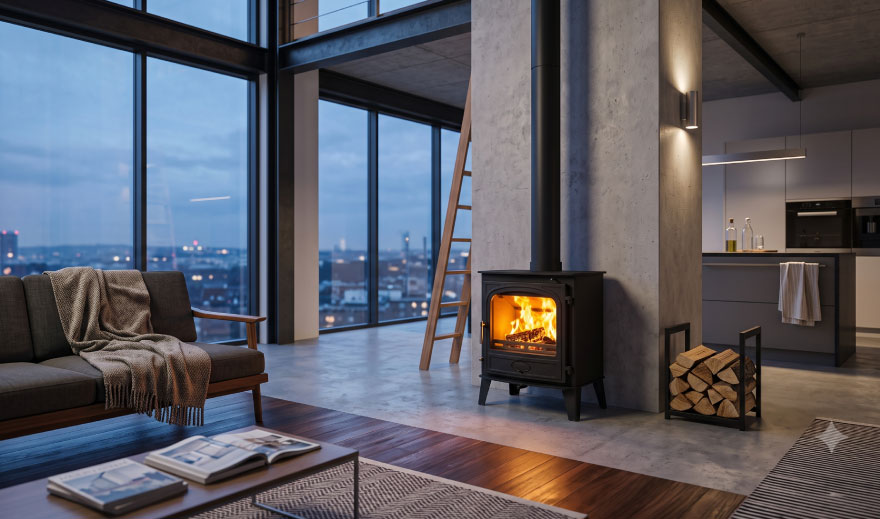
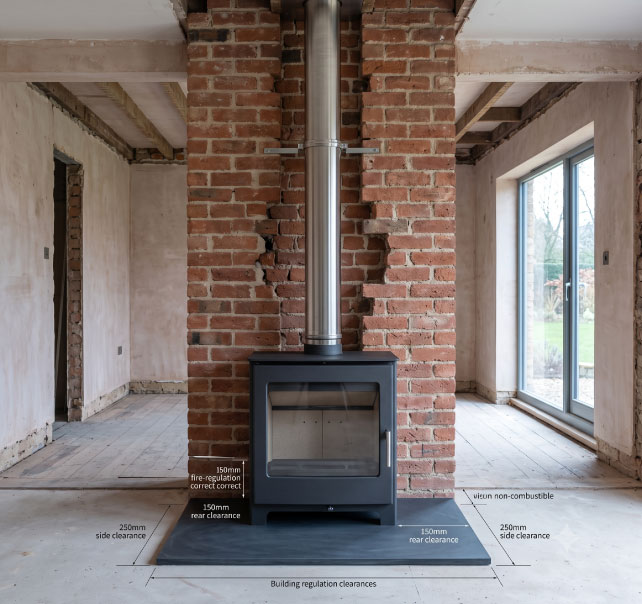
Connecting Flue Pipe to Stove and Register Plate Detail
Connecting flue pipe to stove within the fireplace recess involves the short run between the appliance outlet and the liner adaptor. This is finished with a register plate closing the builder’s opening, which prevents heat loss up the void and stops debris falling into the recess.
A well-fitted register plate is sealed, supported, and provided with sweeping access. A poorly fitted one leaks air, reduces efficiency, and makes future maintenance difficult.
- Gas-tight connection between appliance and liner
- System weight supported independently of the stove outlet
- Register plate sealed and properly supported
- Sweeping access provided for future maintenance
- Smoke and draw testing completed before handover
Installing a Chimney for a Wood Stove Where None Exists
Where a property has no chimney at all, installing a chimney for a wood stove means a twin wall flue system routed internally through the building or externally up an outside wall. The survey establishes which is practical, and the answer usually depends on roof construction and internal layout.
Call 01706 822208 or 07787 858585 to arrange a survey, whether you have an existing chimney to assess or need a new flue route designed from scratch.
Whichever route applies, the survey establishes it before any price is given. Chimney condition, roof construction, and internal layout all change what is practical, and none of them can be assessed from a phone call.