
Fitting Wood Burning Stove in Existing Fireplace
Fitting a wood burning stove into an existing fireplace is one of the most common installation scenarios, but the space you’re working with brings its own specific considerations depending on whether that fireplace sits in a traditional lounge, a garage, or a conservatory. Each setting affects ventilation requirements, flue routing options, and sometimes the choice of appliance itself. This page explains what’s involved in fitting a stove into these different existing spaces, and what to expect from a properly compliant installation regardless of the room it’s going into.
Installing a Wood Burning Stove in an Existing Fireplace
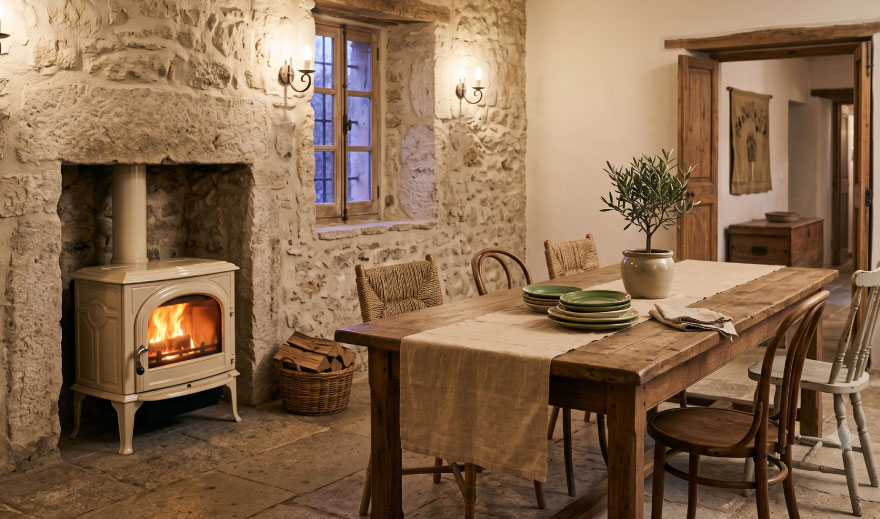
Installing a wood burning stove in an existing fireplace opening usually starts with confirming the opening itself is a suitable size and shape for the appliance you’ve chosen, and that the existing chimney above it is structurally sound and correctly lined. Many traditional fireplace openings were built for open fires, so some adaptation is often needed to fit a modern stove cleanly and safely into the space.
This adaptation might involve adjusting the hearth to meet current clearance standards, fitting a register plate to seal the opening around the flue, or relining the chimney if the existing lining isn’t suitable for the appliance being installed. None of these steps are optional extras — they’re part of what makes the finished installation genuinely compliant rather than just visually complete.
A proper existing fireplace installation includes:
- Assessment of the fireplace opening size against the chosen appliance
- Hearth adaptation to meet current clearance and material standards
- Chimney relining where the existing lining isn’t suitable
- Register plate fitting to seal the opening correctly
- Final compliance certification confirming the installation meets regulations
Install Wood Stove in Fireplace: Common Considerations
When you install a wood stove in a fireplace opening, the position of the appliance relative to the opening’s depth and width affects both appearance and how well the stove connects to the flue above. An installer will typically discuss appliance positioning with you at the survey stage, balancing your preferences with what the specific opening allows for a safe, compliant fit.
Getting this right first time avoids the appliance looking awkwardly placed or, more importantly, being connected in a way that compromises the flue seal.
Installing Wood Burning Stove in Garage Spaces
Installing a wood burning stove in a garage brings different considerations than a standard lounge fireplace, particularly around ventilation and flue routing since garages often don’t have an existing chimney to work with. In these cases, a twin wall flue system is frequently the practical solution, routed either through the roof or out through an external wall.
Ventilation requirements also need careful attention in garage installations, since the room may not have the same natural air changes as a typical living space, and solid fuel appliances need adequate air supply to burn safely and efficiently.
- Recess dimensions measured against the appliance
- Clearances to combustible materials confirmed
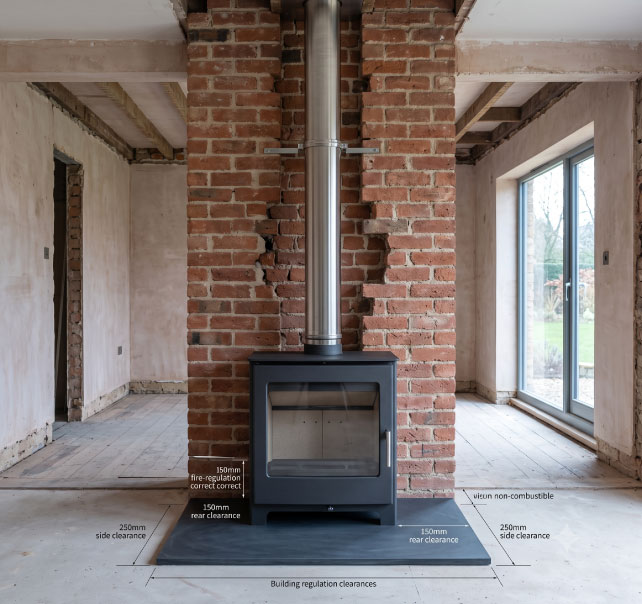
- Hearth depth and material checked to Part J
- Lintel condition assessed before work begins
Practical Factors for Garage Stove Installations
Garage stove installations often need to account for the building’s construction type, particularly if the garage has a lightweight roof structure that affects how a twin wall flue route can be planned. An experienced installer will factor this into the survey and explain any structural considerations before quoting the job.
Storage and general garage use around the appliance is also worth discussing, since combustible materials commonly stored in garages need to be kept at a safe clearance from the stove and flue.
- Recess dimensions measured against the appliance
- Hearth depth and material confirmed to Part J
- Clearances to combustible materials checked
- Ventilation calculated for the room and output
Log Burner Installation in a Conservatory
Log burner installation in a conservatory requires particularly careful ventilation assessment, since conservatories are often built with different insulation and airflow characteristics than the rest of the house. The appliance needs sufficient air supply to burn correctly, and the room’s construction may affect how straightforward this is to achieve.
Flue routing in a conservatory installation also needs specific attention, since the lightweight or glazed roof structure common to these spaces isn’t always straightforward to route a flue through safely.
Wood Burning Stove Indoor Installation Across Different Rooms
Wood burning stove indoor installation, whatever room it’s going into, follows the same core safety principles — correct flue specification, adequate ventilation, and compliant hearth and clearance measurements. What changes between a lounge, garage, or conservatory installation is how these principles are applied to the specific space and its existing structure.
A HETAS-registered installer assesses each of these factors individually during the site survey, rather than applying a one-size-fits-all approach regardless of where the stove is going.
Getting your stove properly fitted into an existing fireplace, garage, or conservatory protects both safety and long-term performance, whatever room you’re working with. Call 01706 822208 or 07787 858585 to arrange a site survey and discuss your specific installation.
—